
What the Fuel Crisis in Europe Means for Transport
The fuel crisis in Europe is no longer a developing risk. It is already affecting how goods move across the region. The International Road Transport Union (IRU) has warned that rising fuel prices, diesel shortages, and supply imbalances are beginning to disrupt road transport and cross-border logistics.
According to the IRU, current fuel market conditions are threatening the continuity of freight movements and require urgent EU level coordination.
At its core, the issue is not just cost. It is the growing instability of transport capacity, which underpins the entire European supply chain.
IRU Warning Signals Pressure on European Transport Networks
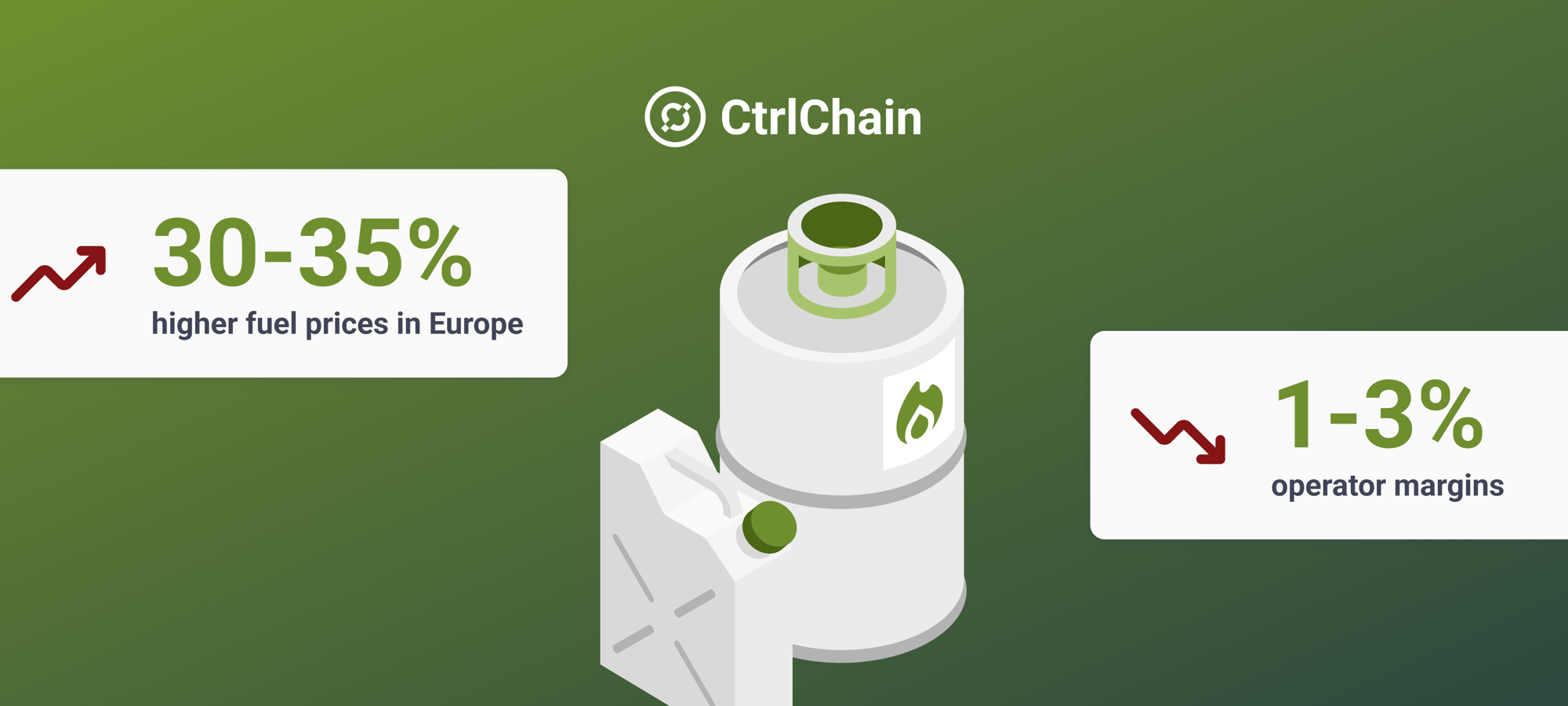
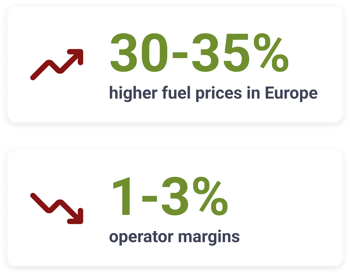
Fuel prices have risen by as much as 30 to 35 percent in parts of Europe, while operator margins remain as low as 1 to 3 percent, according to IRU data. This creates a structural imbalance that forces immediate operational adjustments across the sector.
The IRU has also warned that without coordinated action, these pressures could affect the stability of the EU single market.
At the same time, diesel availability remains uneven across European markets, creating distortions in how transport routes are planned and executed.
How the Crisis Is Already Disrupting Transport Routes
The disruption is not happening as a sudden breakdown, but as a gradual shift in how the network behaves. Transport operators are increasingly factoring fuel access and price volatility into routing decisions, rather than focusing purely on efficiency.
Industry coverage shows that this is already affecting cross border transport corridors, where fuel supply imbalances are reducing predictability.
What emerges is a system where routes are no longer defined only by distance or demand, but by fuel economics and availability.
How This Impacts Food, Pharmaceutical and High Value Supply Chains
When transport becomes unstable, the impact is amplified in industries where time, security and compliance are critical.
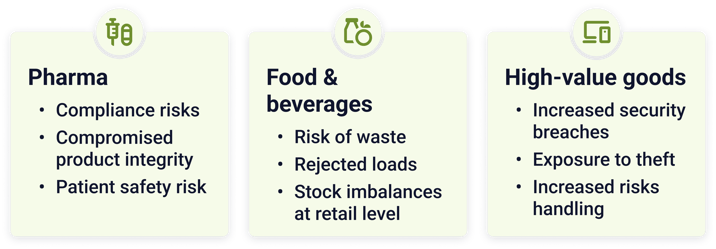
In food and beverage, even small delays can compromise freshness, shelf life, and availability. Cold chain integrity depends on consistent transit times, and any disruption increases the risk of waste, rejected loads, and stock imbalances at retail level.
In the pharmaceutical sector, reliability is not only a commercial issue but a regulatory one. Temperature controlled transport, validated routes, and strict delivery windows mean that variability introduces compliance risks. Delays or rerouting can affect product integrity and, in some cases, patient safety.
For high value goods, the challenge is different but equally critical. When routes become less predictable, exposure to theft, handling risks, and security breaches increases. These flows rely on tightly controlled logistics, and instability weakens that control.
Across all three sectors, the common factor is that transport is not just a cost. It is a critical layer of product integrity, risk management, and service reliability.
A Shift in Capacity Across European Freight Markets
One of the most important consequences of the fuel crisis is the way it is reshaping freight capacity in Europe. Capacity is not disappearing outright, but it is becoming more selective.
As operators reassess profitability under volatile fuel conditions, certain routes lose priority and some fleets reduce activity. This aligns with IRU warnings that market conditions are beginning to impact the availability of transport services across regions.
Over time, this leads to tighter capacity in specific lanes and greater volatility in pricing and availability.
What You Should Do Now
In this environment, you cannot treat transport as a transactional service.
You need to secure reliable capacity through strong partnerships.
When fuel volatility leads to surcharges or mid cycle renegotiations, having a trusted logistics partner changes the conversation. It gives you access to capacity when it is constrained, and it gives you leverage to manage cost increases in a controlled way.
This is particularly critical for food, pharmaceutical, and high value flows, where failure is not an option. You need partners who understand the sensitivity of your goods and can prioritize your shipments when networks are under pressure.
You should also rethink flexibility. Routes may change, transit times may vary, and pricing may fluctuate. The ability to adapt quickly, with the right partner, becomes a competitive advantage.
Finally, visibility is no longer optional. Real time insight into your transport flows allows you to anticipate disruption and react before it impacts your operations.
Why the European Logistics Model Is Being Stress Tested
For years, the European logistics system has been optimized around efficiency, with tight margins and just in time delivery models. That approach depends on stable inputs, especially fuel.
The current energy and fuel crisis in the EU challenges that foundation. As volatility increases, logistics systems move away from pure optimization and toward risk management.
This reflects what the IRU is warning about. A transition from stable and predictable flows to a more fragile and reactive transport network.
What This Means for Your Supply Chain Going Forward
The IRU warning makes clear that the fuel crisis in Europe is already disrupting transport routes and logistics networks. What appears to be a cost issue is, in reality, a shift in how the system operates under pressure.
For industries such as food, pharmaceuticals, and high value goods, the stakes are even higher. The challenge is no longer just cost control, but maintaining secure, compliant, and reliable movement of goods across Europe.