



When healthcare meets supply chain
The explosive growth of GLP-1 medications such as Ozempic and Wegovy is no longer just a medical headline. It is creating a structural shift in demand that is transforming Food & Beverage volumes while simultaneously driving a surge in pharmaceutical cold-chain logistics across the United States.
For logistics leaders, this is not a short-term fluctuation in consumption. This is a full-on network planning event that requires attention, insight, and action.
 GLP-1 Adoption is accelerating
GLP-1 receptor agonists work by slowing digestion, regulating blood sugar, and reducing appetite. The result? Users often consume up to 20% fewer calories.
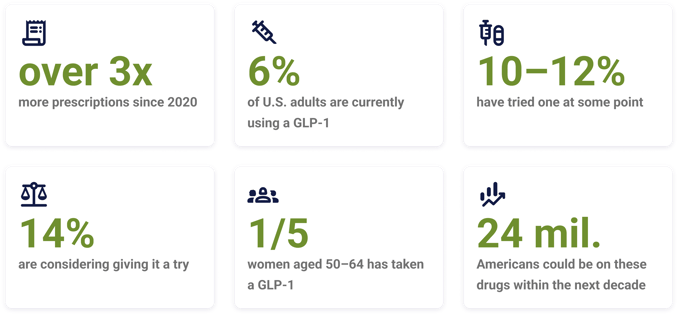
And the numbers are striking:
- Prescriptions have more than tripled since 2020
- Around 6% of U.S. adults are currently using a GLP-1
- 10–12% have tried one at some point
- 14% are considering giving it a try
- One in five women aged 50–64 has taken a GLP-1
- Projections suggest that 24 million Americans could be on these drugs within the next decade
With over 110 million Americans living with obesity, the long-term demand looks solid. Some forecasts even project the weight-loss drug market could hit $45 billion by 2032.
For supply chains, this isn’t just numbers on a chart. It translates into a sustained growth in pharmaceutical freight, with clear operational implications.
Why this matters for shippers
For shippers across Food & beverage and pharmaceuticals, the rise of GLP-1 drugs is more than a healthcare trend. It directly impacts freight volumes, network planning, and carrier strategy.
As consumption patterns change, logistics teams may start seeing:
- Lower shipment volumes for certain high-calorie packaged food categories
- Higher demand for fresh and temperature-sensitive products
- Increased competition for refrigerated transport capacity
- More compliance requirements when moving pharmaceutical products
For companies operating both ambient and temperature controlled supply chains, these shifts can reshape lane density, warehouse utilization and transportation costs.
Understanding these trends early allows shippers to adjust their logistics strategy before demand patterns fully shift.
The food & beverage demand shock
GLP-1 adoption isn’t just affecting pharmacies. It’s shaking up grocery stores and restaurants too.
Within six months of starting treatment, households reduce grocery spending by 5.3%, while spending at fast-food outlets and restaurants drops as much as 8%.
In 2023, Walmart analyzed its internal pharmacy and grocery data and confirmed the trend: GLP-1 users were buying fewer calories, particularly cutting back on sweets and snacks.
 The categories most affected include:
- Confectionery
- Savory snacks
- Ultra-processed foods
- Sweet baked goods
Even a seemingly small 2–3% contraction in these high-volume categories can ripple through the logistics network, impacting:
- Distribution center throughput
- Lane density
- Carrier allocation
- Contract pricing
This shift requires planning for smaller, more frequent shipments, tighter delivery windows and a greater reliance on temperature-controlled transport. Networks that were optimised for large volumes of shelf-stable goods may need to adapt to handle more time-sensitive freight.
Fresh food is on the rise, and complexity follows
Not all categories are shrinking. In fact, GLP-1 users are spending more on fresh produce. Over a measured period, spending on fresh fruit rose 14%, and vegetable spending jumped 38%.
This shift toward fresh, protein-rich, and fiber-focused foods comes with a new set of logistical challenges:
- More temperature-controlled requirements
- Faster inventory turnover
- Increased shrink risk
- Higher replenishment frequency
The takeaway is clear: less volume does not mean less complexity. In many cases, it makes logistics more sensitive and demanding.
Pharmaceutical Logistics: The Growth Side
While snack volumes soften, pharmaceutical distribution is ramping up fast.
GLP-1 medications, particularly semaglutide, require strict temperature control from warehouse to patient. That translates into:
- Growth in refrigerated warehousing
- Higher demand for validated cold-chain carriers
- Continuous temperature monitoring
- Detailed compliance documentation
As pharma freight expands, it increasingly competes for the same temperature-controlled resources that fresh food supply chains rely on. This creates pricing pressure, capacity constraints, and allocation challenges.
What this means for network planning
The Ozempic effect is driving a clear freight mix transformation:
Food & Beverage
- Snack volumes are declining
- Fresh and temperature-sensitive products are increasing
- Cold-chain demand is exploding
- Compliance and monitoring requirements are stricter than ever
Pharma
- Cold-chain demand is exploding
- Compliance and monitoring requirements are stricter than ever
What shippers should do now
For logistics leaders, the Ozempic effect requires proactive adjustments rather than reactive changes.
1. Reevaluate network design
Shippers should assess whether their distribution networks are optimized for shifting demand patterns. Lower snack volumes and higher fresh food consumption may require different warehouse flows, replenishment strategies, and lane structures.
2. Secure cold-chain capacity early
Both fresh food and pharmaceutical supply chains rely on temperature-controlled transport. As GLP-1 demand increases, competition for refrigerated carriers will intensify. Establishing strong carrier partnerships early can help secure capacity and stabilize costs.
3. Increase visibility across temperature-sensitive shipments
As cold-chain logistics grows, so does the need for real-time monitoring and compliance documentation. Shippers should ensure they have clear visibility into temperature conditions, transit times, and potential disruptions.
4. Incorporate healthcare trends into demand forecasting
Consumption patterns are increasingly influenced by healthcare developments. Logistics and supply chain teams should work closely with commercial and data teams to incorporate these external trends into their forecasting models.
The Ozempic effect is not just a consumer trend. It is a logistics restructuring in real time, and ignoring it is no longer an option.